


Key benefits of MEX CMMS for breweries
In this post

1
2
For breweries, consistent production quality depends on reliable equipment. MEX CMMS helps manage preventive maintenance, track asset performance, and ensure compliance with industry standards; minimising downtime and supporting smooth, efficient operations.
Boost Your Brewing: The Maintenance Solution You Need
Running a brewery involves more than just crafting the perfect brew; it's about maintaining the equipment and processes that keep the operation flowing smoothly. Whether you're a craft brewer or managing a large-scale brewery, the key to consistent quality lies in ensuring your machinery and infrastructure are well-maintained.
This is where MEX CMMS (Computerised Maintenance Management System) steps in as a reliable ally for breweries.
Why MEX CMMS?
Breweries are intricate operations with complex machinery that needs to run seamlessly. From the brewing kettles to the bottling lines, even minor equipment downtime can lead to costly production delays.
MEX CMMS is designed to help breweries tackle these challenges head-on by offering a comprehensive maintenance management solution.
Key Benefits of MEX CMMS for Breweries
Preventive Maintenance
In an industry where equipment reliability is crucial, MEX CMMS helps breweries implement a robust preventive maintenance schedule. This means less unplanned downtime, fewer breakdowns, and more consistent production.
Efficient Work Order Management
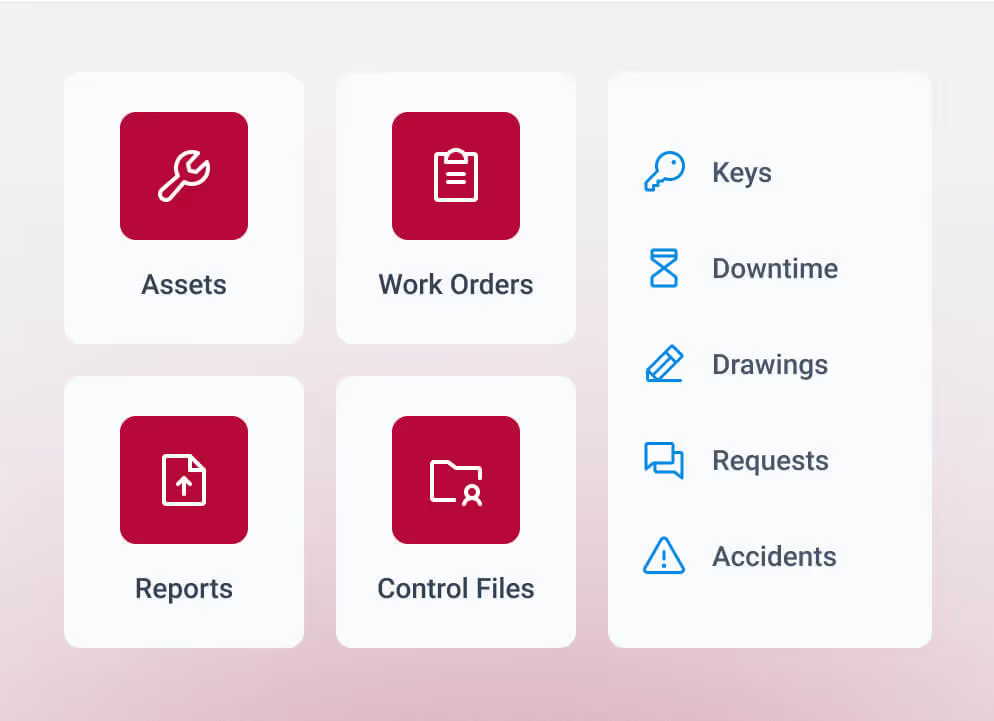
Managing work orders can be tricky, especially when you need to balance multiple tasks across different areas of your brewery. MEX CMMS simplifies this process by allowing you to create, track, and manage work orders efficiently. This ensures that maintenance tasks are completed on time and without disrupting production.
Asset Management
From small parts to large machinery, every piece of equipment is vital to your brewery. MEX CMMS helps you manage your assets, keeping them in top shape and ready to perform.
Compliance and Reporting
The brewing industry is subject to various regulatory requirements, particularly regarding health and safety standards. MEX CMMS assists in ensuring that your brewery stays compliant by tracking inspections, certifications, and maintenance activities. Plus, with easy reporting features, you can quickly generate the necessary documentation for audits.
Mobile Accessibility
Breweries are dynamic environments, and maintenance teams need to be able to respond quickly to issues. With MEX CMMS, your team can access the system from anywhere using mobile devices. This means faster response times and real-time updates on maintenance tasks.
Success Stories in the Brewery Industry
Breweries have turned to MEX CMMS to help streamline their maintenance operations and improve their bottom line. From reducing equipment downtime to extending the lifespan of critical assets, MEX CMMS has proven to be a valuable tool for brewers of all sizes.
One notable success story is Paradise Beverages in Fiji. As one of the Pacific region's leading beverage companies, Paradise Beverages needed a reliable maintenance management solution to keep their operations running smoothly.
By implementing MEX CMMS, they were able to optimise their preventive maintenance schedules and maintain their equipment more effectively. This led to a significant reduction in downtime and an overall improvement in operational efficiency, ensuring that their brewing and bottling processes remained uninterrupted.
The success of Paradise Beverages with MEX CMMS highlights the system's ability to adapt to the unique needs of the brewing industry, no matter the scale of the operation.
In the competitive world of brewing, maintaining your equipment is just as important as perfecting your recipes.
MEX CMMS provides breweries with the tools they need to stay on top of maintenance tasks, reduce downtime, and ensure consistent, high-quality production.
Whether you're a small craft brewer or managing a large-scale operation, MEX CMMS is the reliable ally that can help you brew success.
- Automate maintenance schedules, track equipment health, and prevent unplanned downtime that impact production quality with a CMMS.
- Ensure every asset inspection and service meets industry compliance standards, helping breweries maintain consistent product quality and meet regulatory requirements.

Download your whitepaper now
You’re all set!
Your eBook is on its way to your inbox. We hope it brings fresh insights and practical takeaways to help you get more from your maintenance operations.





Boost Your Brewing: The Maintenance Solution You Need
Running a brewery involves more than just crafting the perfect brew; it's about maintaining the equipment and processes that keep the operation flowing smoothly. Whether you're a craft brewer or managing a large-scale brewery, the key to consistent quality lies in ensuring your machinery and infrastructure are well-maintained.
This is where MEX CMMS (Computerised Maintenance Management System) steps in as a reliable ally for breweries.
Why MEX CMMS?
Breweries are intricate operations with complex machinery that needs to run seamlessly. From the brewing kettles to the bottling lines, even minor equipment downtime can lead to costly production delays.
MEX CMMS is designed to help breweries tackle these challenges head-on by offering a comprehensive maintenance management solution.
Key Benefits of MEX CMMS for Breweries
Preventive Maintenance
In an industry where equipment reliability is crucial, MEX CMMS helps breweries implement a robust preventive maintenance schedule. This means less unplanned downtime, fewer breakdowns, and more consistent production.
Efficient Work Order Management
Managing work orders can be tricky, especially when you need to balance multiple tasks across different areas of your brewery. MEX CMMS simplifies this process by allowing you to create, track, and manage work orders efficiently. This ensures that maintenance tasks are completed on time and without disrupting production.
Asset Management
From small parts to large machinery, every piece of equipment is vital to your brewery. MEX CMMS helps you manage your assets, keeping them in top shape and ready to perform.
Compliance and Reporting
The brewing industry is subject to various regulatory requirements, particularly regarding health and safety standards. MEX CMMS assists in ensuring that your brewery stays compliant by tracking inspections, certifications, and maintenance activities. Plus, with easy reporting features, you can quickly generate the necessary documentation for audits.
Mobile Accessibility
Breweries are dynamic environments, and maintenance teams need to be able to respond quickly to issues. With MEX CMMS, your team can access the system from anywhere using mobile devices. This means faster response times and real-time updates on maintenance tasks.
Success Stories in the Brewery Industry
Breweries have turned to MEX CMMS to help streamline their maintenance operations and improve their bottom line. From reducing equipment downtime to extending the lifespan of critical assets, MEX CMMS has proven to be a valuable tool for brewers of all sizes.
One notable success story is Paradise Beverages in Fiji. As one of the Pacific region's leading beverage companies, Paradise Beverages needed a reliable maintenance management solution to keep their operations running smoothly.
By implementing MEX CMMS, they were able to optimise their preventive maintenance schedules and maintain their equipment more effectively. This led to a significant reduction in downtime and an overall improvement in operational efficiency, ensuring that their brewing and bottling processes remained uninterrupted.
The success of Paradise Beverages with MEX CMMS highlights the system's ability to adapt to the unique needs of the brewing industry, no matter the scale of the operation.
In the competitive world of brewing, maintaining your equipment is just as important as perfecting your recipes.
MEX CMMS provides breweries with the tools they need to stay on top of maintenance tasks, reduce downtime, and ensure consistent, high-quality production.
Whether you're a small craft brewer or managing a large-scale operation, MEX CMMS is the reliable ally that can help you brew success.


Related resources
You’ve seen what’s possible—connect with us to learn how TMA Systems can support your goals beyond the event.
You’ve read the insights, now see how TMA Systems helps teams put them into practice.
From ideas to impact
You’ve read the insights, now see how TMA Systems helps teams put them into practice.
From screen to solution
You’ve watched what’s possible, now see how TMA Systems works for your organization.
From insight to implementation
You’ve explored the strategies, now see how we can bring them to life across your real facilities.